The Toast Years: Why a Narrow Menu Isn't a Parenting Fail
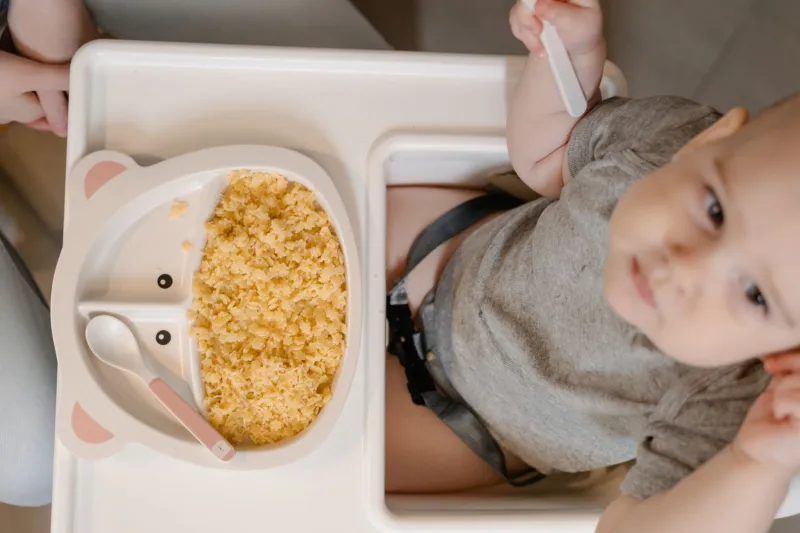
There's a particular kind of quiet shame that comes with plating up tea. You've made something lovely — a bit of salmon, some broccoli, a handful of couscous — and your three-year-old looks at it as though you've served up a paving slab. Then they ask for toast. Again.
If that's your kitchen, take a breath. You are not failing, and your child is not broken. Narrow eating is one of the most common things parents raise with us at nursery, and it is almost always about development rather than dinner.
First, the reassurance nobody hands you at the 18-month check
Food fussiness tends to climb steeply somewhere between the second and third birthday, often peaks around two to four, and then loosens gradually as children grow more confident and more sociable. Health visitors and dietitians see it constantly. In most cases it isn't a sign of a nutrient disaster, and it isn't caused by anything you did or didn't do in the weaning days.
There's a decent evolutionary argument for it, too. A toddler who suddenly refuses anything unfamiliar is a toddler who doesn't eat the wrong berry. Suspicion of new things is, in a strange way, a safety feature.
What the beige is actually doing for your child
Predictable food isn't naivety — it's competence. Your child knows exactly how toast looks, smells, sounds and feels. There's nothing to negotiate. Compare that with a plate of new textures, where the broccoli might be squeaky, the sauce might be lumpy, and the whole experience asks a small person to process about six unfamiliar sensations at once.
For some children, that sensory load lands harder. We notice it at nursery: a child who will happily eat a dry cracker but finds a wet piece of fruit genuinely distressing isn't being difficult. Their brain is working overtime on the texture.
So before you launch another campaign of hidden vegetables, it can help to reframe the goal. You're not trying to win a single meal. You're trying to keep food a safe, unpressured subject for the next few years.
The pressure trap (and how to spot it in yourself)
Most of us start out relaxed and get gradually more anxious. It sounds like: just one bite. One for Mummy. You can't have pudding until. Look, your sister is eating it.
We've all said it. The trouble is that pressure tends to work in reverse. A child who feels watched, coaxed or bribed learns that this food is a big deal, and big deals are alarming.
The helpful, evidence-informed starting point is a simple division of jobs: the adult decides what is offered, when, and where. The child decides whether to eat it, and how much. That's it. That's the whole deal. It feels uncomfortably hands-off the first week or two, and then it tends to feel like a relief.
Small moves that tend to help
None of these are quick fixes, and none of them are compulsory. Pick one.
Serve things in shared bowls. Putting the pasta in the middle and letting everyone help themselves quietly removes the sense that a plate is being graded.
Keep a safe food on the plate, always. Never remove something your child reliably eats in the hope it forces the issue. It won't. Keep the toast on the table and add the unfamiliar thing beside it.
Go tiny. A single pea, half a grape, one strip of pepper. Big portions are visually overwhelming and signal expectation. Tiny portions signal no big deal.
Lower the bar to looking. Noticing, sniffing, touching, licking and then putting something down again is real progress. Plant the tomato on the side of the plate and comment lightly: that one's juicy inside. Then move on.
Eat together where you can. Children learn far more from what they see than what they're told. A parent happily eating something, without commentary, does more than a hundred encouraging sentences.
Let them in on the making. Stirring, tearing lettuce, pressing the button on the blender, choosing between two vegetables at the shop. Ownership is undervalued.
Keep the descriptions neutral. This is crunchy. This is warm. Not this is yummy — which invites your child to disagree, and gives them a chance to say no.
Keeping nursery and home in step
One of the quieter advantages of nursery is repetition in company. Shared snack bowls, self-serving, children eating alongside each other with no spotlight — that's the environment most likely to nudge a cautious eater along.
Tell your key person what's happening at home and what's currently working, and ask what they're seeing. Sometimes a food that's refused in your kitchen is eaten without comment in a room full of peers, and vice versa. Sharing notes means you can offer the same low-pressure language in both places rather than one place negotiating and the other insisting. If your child is happy to try something at nursery, ask how it was served and copy it exactly. The familiarity of the format does a surprising amount of the work.
Pudding, bribery and the rest
Serving pudding as part of the meal, rather than as a reward, generally reduces the bargaining — even though it feels counter-intuitive. Treating dessert as the prize teaches children to value it above everything else on the table and to eat to get there rather than because they're hungry.
And if your child eats a lot of one thing and very little of most others for a few months, that is a normal phase for the overwhelming majority. Aim for balance across a week, not a day.
When to ask for more support
Most narrow eating resolves itself with time, patience and low pressure. But it isn't always a phase, and there's no prize for waiting in silence. Seek extra input from your health visitor or GP if:
- your child's list of accepted foods is shrinking rather than growing, or has stayed very short for many months
- they seem distressed rather than wary — gagging, crying or panicking at the sight or smell of food
- they're losing weight, dropping down growth centile lines, or you're worried about their overall intake
- mealtimes are consistently long and stressful for the whole family
- they struggle with whole food groups, or with any wet or mixed texture
- you've noticed other sensory differences or feeding difficulties
You can also ask your nursery about their SENCO or a referral to a dietitian, and your GP can refer on where it's needed. There's a recognised feeding difficulty called ARFID, and it's worth knowing the name so you can ask about it if this feels bigger than fussiness.
The long view
Somewhere in your future is a child who orders something surprising off a menu in a restaurant, entirely unprompted. It happens. It tends to happen sooner when the kitchen has been a calm place to say no in.
So keep the toast coming. Serve it alongside something new and small and cheerful. Say nothing much about it. That's not giving in — it's keeping the door open.