Encore, Encore: What All Those Repeated Requests Are Building in Your Child
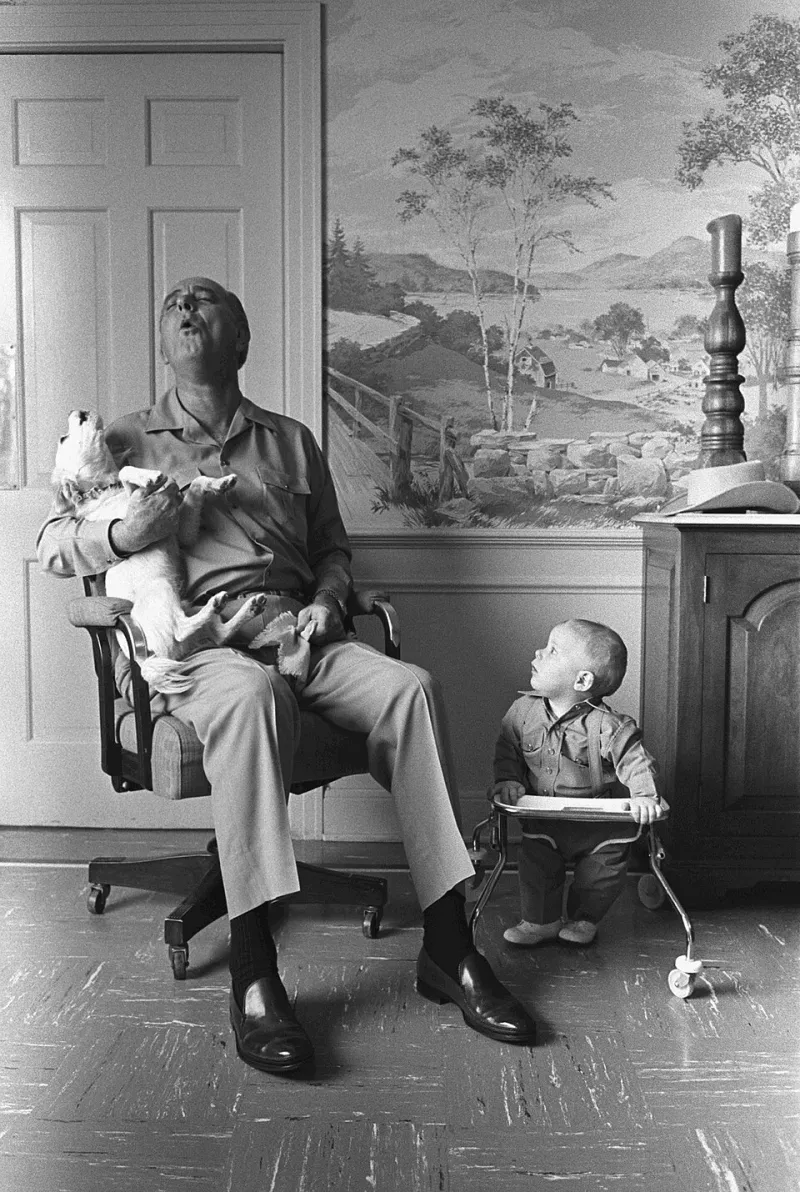
Photo: President (1963-1969 : Johnson). White House Photograph Office. 1963-1969, Public domain, via Wikimedia Commons
There is a particular kind of tired that arrives around the fourth request for the same song. You know the one. The one with the actions. The one you have already sung twice on the way to nursery, once in the Co-op queue and now, apparently, again. Your child looks up at you with absolute certainty and says: 'Again.'
It can feel like a small test of adult stamina. But in early years settings, that request is usually doing something rather useful. Repetition is not a sign that your child is stuck. It is often a sign that they are working something out — a word, a rhythm, a sequence, a feeling — and they have found a safe place to practise it.
At Happy Hearts Journal, we are all for a bit of gentle reframing. So here is the case for the encore, and some low-effort ways to enjoy it without feeling like you have to invent a new cabaret every day.
The brain's favourite shortcut
Under-fives are taking in an enormous amount of information. Every nursery day brings new faces, new instructions, new textures and new social rules. A familiar song or story is like a well-worn path through all that noise. Your child already knows where it goes, so they can spend their energy on the finer details: the words, the pauses, the bit where the duck says quack.
That is why repetition supports language so well. Each time you read the same book, your child hears the same vocabulary in the same order. They begin to anticipate what comes next. They might join in with a word, then a phrase, then a whole line. This is not boring to them; it is a kind of mastery. They are moving from listener to participant.
The same goes for memory. A repeated rhyme helps a child hold a sequence in their head — first this, then that, then the ending. It is a gentle workout for working memory, wrapped up in something that feels like fun.
Security in a well-worn groove
Repetition is not only cognitive. It is emotional too. A familiar story at the end of a nursery day can act like a small anchor. Your child has spent hours being flexible, sharing, waiting and navigating a busy room. The same book, the same song, the same silly voice can signal: we are back in our own rhythm now.
This is why a child might ask for the same story after a wobbly drop-off or a day when they have been unwell. They are not demanding novelty. They are asking for comfort in a form they recognise. In a setting, a key person might use the same hello song or the same goodbye phrase for exactly this reason. Predictability helps children feel held, even when the rest of the day has been busy.
What repetition is not
It is worth saying what this is not. Repetition is not a reason to ignore your own limits. You are allowed to say, 'One more, then we will choose something else.' You are allowed to offer two familiar options rather than an endless playlist. You are allowed to feel a tiny bit weary of the Gruffalo's mouse. That does not make you a bad parent; it makes you a human who has heard the same rhyme a great many times.
The goal is not to force novelty, but also not to turn every request into a battle. A gentle middle path usually works: follow your child's lead for a while, then widen the circle when they are ready.
Joining in without forcing novelty
You do not need a new activity every day. In fact, adding a tiny variation to something familiar can be more powerful than introducing something completely new. Try one of these:
- Pause before the last word of a familiar line and let your child fill it in.
- Ask a simple question about the story: 'Where has the bear gone?' rather than quizzing them.
- Let your child be the singer and you be the audience for one round.
- Use a different voice for one character, then return to the usual one.
- Keep the same song but change the name to a family member or a pet.
These are small changes. They keep the security of the familiar while gently stretching attention and language.
Small rituals for the nursery run, car and bath
Repetition really earns its keep during the ordinary transitions of the day. A few predictable rituals can reduce friction and give your child something to look forward to.
On the nursery run. Choose one song or rhyme for the last few minutes of the walk or drive. It becomes a signal that nursery is close. If your child is feeling clingy, the song can be a bridge: 'We will sing it again on the way home.'
In the car. Keep a small, rotating cast of favourites. You do not need a huge library. Two or three songs that your child knows well can be enough. Let them request one, then choose one yourself. That way, repetition stays shared rather than one-sided.
At bathtime. Use the same order of events: cups away, bubbles, one song, towel. The song does not have to be about baths. It just has to be the one that means 'we are finishing now'. Predictability can make the end of bathtime feel less like a sudden ambush.
On the walk home. Try a noticing game with the same opening line each day: 'I can see something round.' Your child can point, guess or add their own. The repeated frame gives them confidence to join in.
When to gently widen the circle
If your child is happily repeating the same thing, there is no rush to move on. But if you sense they are ready for a little more, offer a gentle bridge rather than a replacement. Try a book by the same author, a song with a similar rhythm, or a game with the same actions. Familiarity can be a doorway to something new, not a door that has to be closed.
And if your child is going through a big change — a new room at nursery, a new baby, a move — expect repetition to increase. That is not regression. It is a child reaching for something steady while the ground shifts.
A final note for the grown-up
You will not always feel enchanted by the tenth rendition of 'The Wheels on the Bus'. That is fine. You can sing it with a flat voice and a tired smile and still be giving your child something valuable: your presence, your rhythm and the message that their favourite things matter to you.
The encore is not an obstacle to the day. It is often the thread that holds the day together. So the next time you hear 'again', take a breath. You are not stuck in a loop. You are helping a small person build language, memory and a sense of belonging — one familiar verse at a time.