The Quiet Power of 'I Noticed': Praise That Builds a Child's Inner Compass
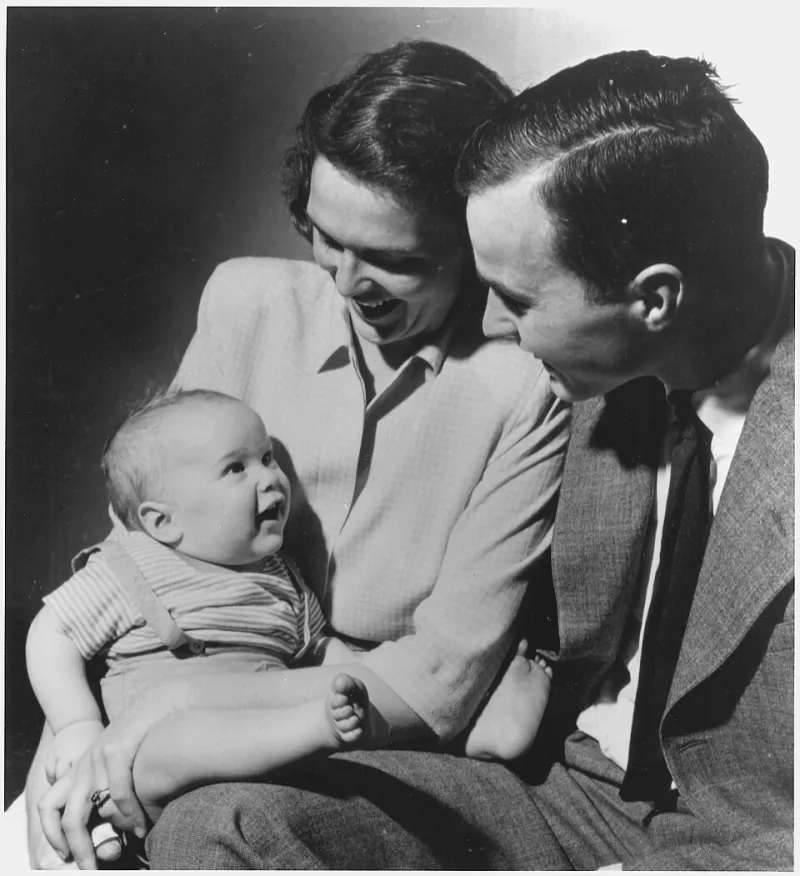
Photo: Unknown authorUnknown author, Public domain, via Wikimedia Commons
There is a moment that happens in almost every early years setting and almost every kitchen in the UK. A child holds up a drawing, a tower or a half-eaten biscuit and waits. The adult says, 'Good girl' or 'Clever boy' or 'That is lovely'. The child beams. Everyone feels fine. And then the moment passes.
I am not here to ban praise. That would be both unrealistic and unkind. But I do think it is worth looking closely at the praise we offer, because the words we use again and again become the background music of a child's inner life. They shape what children think is worth doing, and why. And in the early years, when a child is building their first sense of self, that background music matters more than we sometimes admit.
The praise reflex
Most of us praise on autopilot. We say 'good job' when a child shares, 'well done' when they finish their lunch, 'you are so good at that' when they climb the stairs. The intention is warm. The effect is not always as simple as it looks.
When we praise a child for being 'good', we are evaluating them. We are telling them that a particular action has earned our approval. That is not a terrible thing. Children need warmth and encouragement. But over time, a steady diet of 'good girl' can teach a child that the goal is to be seen as good, rather than to notice what they themselves are doing. The focus shifts from the activity to the audience.
Why 'good girl' can stick
'Good girl' and 'good boy' are shorthand. They are quick, familiar and often said with real affection. But they are also vague. What exactly was good? The sharing? The patience? The fact that they stopped shouting? The child has to guess. And because the phrase is about them as a person rather than the action, it can feel bigger than it needs to be.
There is also the people-pleasing risk. If a child learns that praise arrives when they comply, they may start to check the adult's face before they decide what to do. That is not manipulation; it is adaptation. Children are wired to seek approval from the people who care for them. The question is whether we want that approval to become the main compass, or whether we want it to be one voice among several — including the child's own.
Praise as evaluation, noticing as information
A useful distinction is between praise that evaluates and noticing that informs. 'You are such a good helper' evaluates. 'You put the spoons on the table without being asked — that helped me finish the tea' notices. The second version gives the child information about what they did and what it meant. It does not demand that they become a 'helper' as an identity. It lets them decide what to do with the information.
This is not a new idea. Research on motivation has long suggested that process-focused feedback — comments about effort, strategy and choices — tends to support persistence better than person-focused praise. But we do not need to turn family life into a psychology experiment. We just need to be a bit more specific and a bit less evaluative.
Phrases to try, phrases to gently retire
You do not have to overhaul your vocabulary overnight. Try swapping a few phrases and see how they feel.
- Instead of 'Good girl', try 'You kept trying even when the tower fell.'
- Instead of 'Clever boy', try 'You worked out how to make the bricks balance.'
- Instead of 'That is lovely', try 'I noticed you used three different colours.'
- Instead of 'Well done for sharing', try 'You gave him a turn, and he looked pleased.'
- Instead of 'You are so good at tidying', try 'You put the books back on the shelf.'
These phrases are not magic. Sometimes a child will ignore them completely. Sometimes they will ask, 'But am I good?' That is okay. You can answer warmly: 'You are loved. And I noticed you tried really hard.' The aim is not to withhold warmth. The aim is to attach warmth to something more useful than a label.
Effort is not the only thing worth noticing
There is a small trap in the 'praise effort' advice. If we only ever say 'you tried so hard', a child who finds something easy may wonder what is wrong. Effort is valuable, but so are curiosity, kindness, persistence, humour and the simple pleasure of doing something for its own sake. Notice those too. 'You looked really interested in that snail.' 'You made a joke and it made me laugh.' 'You chose to sit quietly when you needed a break.' All of these help a child build a richer picture of themselves.
When praise is genuinely needed
None of this means we should become cold or withholding. Children need to hear that we are glad they are here. They need celebration. They need to be told they are loved, especially when they are struggling. The point is not to remove praise but to make it less conditional. 'I love spending time with you' is not praise for a behaviour; it is a statement of belonging. 'You are really important to me' does not need to be earned.
There is also a place for straightforward delight. If a child brings you a painting and says, 'Look!', you can say, 'I love it' without turning it into a lesson. The goal is not to analyse every sentence. It is to notice the overall pattern.
Aligning nursery and home without guilt
Parents and practitioners often worry that they are getting it wrong. One setting uses 'good listening', another uses 'I noticed you came to the carpet straight away'. One parent says 'clever girl', another tries to avoid labels completely. The differences can feel like judgement.
They do not have to be. Children can cope with variation. What matters more is the general tone: warmth, consistency and a willingness to notice rather than rate. If your nursery uses 'I noticed' language, you do not have to adopt it perfectly at home. If you use 'good girl' at home, you do not need to feel ashamed. You can simply add a few noticing phrases into the mix and see what happens.
A compass, not a cheerleader
The phrase I keep coming back to is 'inner compass'. We want children to grow up with a sense of what feels right to them, not just a radar for what pleases the nearest adult. Praise can be part of that, but only if it leaves room for the child's own voice. The best praise is not a cheerleader shouting from the sidelines. It is a quiet light that helps a child see what they have done and decide what they want to do next.
So the next time a child holds up a drawing and waits, try pausing for a second. Look at the drawing. Then say what you actually see. 'You used so much blue.' 'You drew a very tall tower.' 'You look pleased with that.' The child may still ask if it is good. You can smile and say, 'What do you think?' And then listen.