Beakers, Buttons and Belonging: Why Little Ones Need Real Work, Not Pretend Help
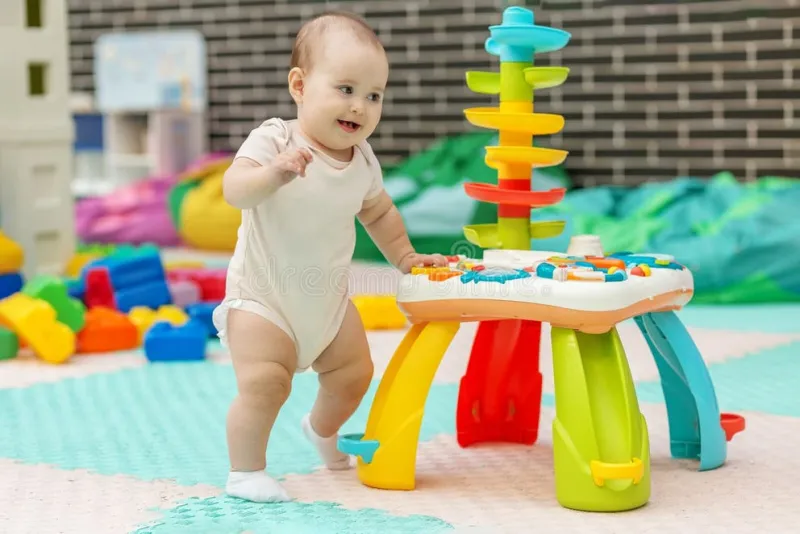
Photo: toddler helping wipe table with tea towel nursery kitchen UK, via thumbs.dreamstime.com
There is a particular look on a small child's face when they are trusted with the beaker tray. It is not exactly pride, not yet. It is closer to concentration with a side of importance. They hold the tray with both hands. They walk a little slower than usual. They put the beakers down one by one, and if one wobbles, they steady it. For a moment, they are not being entertained or instructed. They are helping.
At Happy Hearts, we see this most days: a child who can be quite wobbly at the start of the session becomes noticeably taller when given a proper job. Not a made-up job. Not a reward chart with a sticker at the end. A real one that makes the room work.
A job is not the same as a chore
In adult life, the words are almost interchangeable. At nursery and at home, they are not.
A chore is usually something done to a timetable, for someone else's approval, and often with a sense that it must be done properly. A job, for an under-five, is a contribution. It has a beginning, a middle and an end. It belongs to the child for that small stretch of time. It is visible. It matters.
The difference is subtle but practical. 'Go and tidy that up' is a chore. 'You are on beakers today—can you put one at each place?' is a job. The first asks for compliance. The second asks for competence, and offers belonging alongside it.
Why real work lands differently
Children are not tiny adults, and we should not be running a miniature workplace. But even two-year-olds are wired to notice how a household or a room works. They watch where the spoons go, who feeds the cat, which towel hangs by the sink. Being invited into that ordinary machinery tells them something: you are part of this place.
That sense of belonging is not soft or sentimental. It is one of the sturdy roots of emotional regulation. A child who feels useful has a small anchor when things get tricky. They have a role to return to, even on a day when sharing feels impossible.
There are quieter benefits too. Matching socks is early maths. Carrying a damp cloth to the table is motor planning. Waiting for a turn with the watering can is patience in real time. None of it needs to be dressed up as a lesson. The job is the lesson.
What it can look like at home
You do not need a laminated rota or a special shelf. Start with what is already happening in your kitchen, hallway or bathroom.
For toddlers, jobs tend to be short and physical: putting a nappy in the bin, carrying a spoon to the table, dropping shoes into the basket by the door. For three- and four-year-olds, the job can have a few more steps: setting out beakers, matching socks from the clean pile, wiping the table after snack with a damp cloth, watering a plant, putting the tea towels away. By four or five, many children can manage placemats, sort clean recycling, help load the washing machine or carry their own plate to the side.
The job does not have to be daily. In fact, it is kinder if it is not. A 'helper's job' that appears a few times a week is easier to protect from becoming a battleground. The point is not productivity. The point is participation.
The setting version
In a nursery room, jobs are often woven into the routine rather than announced. One child helps count the cups. Another carries the fruit bowl. Someone holds the door for the buggy line. The key person might say, 'You are my table wiper today,' and that is enough. The job is small, real and finished before the child loses interest.
We try to avoid turning it into a performance. There is no applause and no gold star. Usually there is just a quiet acknowledgement: 'The table is ready now. You did that.' The child hears the connection between their action and the next part of the day.
Step back without making it a test
This is the tricky bit. The moment a job becomes a test, the confidence drains out of it. A child who senses they are being assessed will often refuse the job altogether, or do it in a hurry and walk away.
A few things help:
- Offer the job rather than assigning it. 'Would you like to do the beakers?' leaves room for a no.
- Let the result be a bit wonky. Beakers can be slightly crooked. Socks can be matched by colour rather than pattern. The table can be wiped in swirls.
- Resist redoing it in front of them. If something genuinely needs a second pass, say, 'I will finish the corners,' rather than sighing and taking over.
- Build in time. A job offered when everyone is late is not really a job; it is a stress test.
- Keep it short. Under-fives are not known for their stamina on the tea towel front.
And when it goes wobbly—because it will—try not to treat the wobble as a verdict. Spilled water, a dropped beaker, a sudden refusal: these are ordinary. The job can be paused and offered again another day.
The quiet confidence of being needed
At the end of snack, a child might hang the tea towel over the back of a chair and wander off to play. They will not announce that they feel more capable. They probably will not remember the job by teatime.
But something has been laid down. A small, repeated message: this room needs me, and I can do something real in it. That is not a chore. It is a kind of belonging, and it starts with a beaker tray and a pair of small, careful hands.