Cardboard, Pegs and a Wooden Spoon: The Play Kit You Already Own

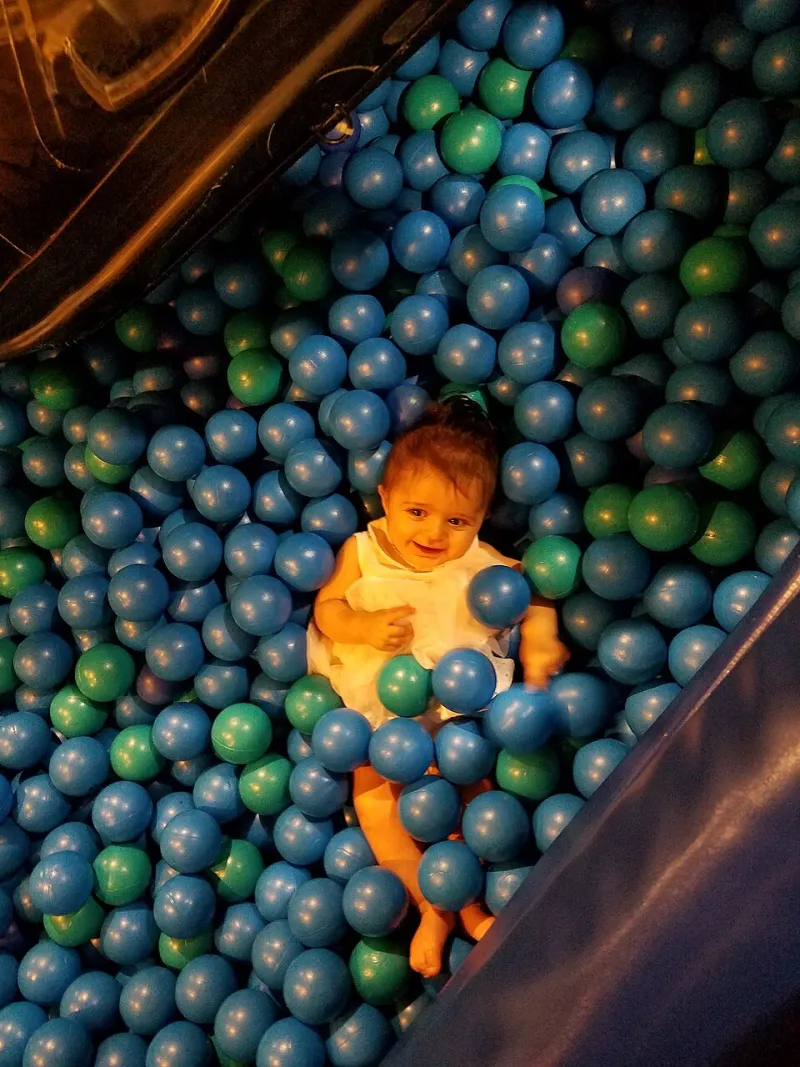
Photo: Orgio89, CC0, via Wikimedia Commons
Every December, roughly four minutes after the wrapping paper comes off, something quietly brilliant happens in living rooms across the country. The toy is ignored. The box is not.
We see it in the nursery rooms constantly. A shiny new resource gets a polite ten minutes; a sturdy cardboard tube gets an entire morning. So before the Christmas haul arrives, it's worth making friends with the fact that some of the best play equipment in your house is currently waiting to be put in the recycling.
Why the box actually wins
Open-ended play has a long, well-evidenced history in early years practice — the term loose parts was coined back in the 1970s by Simon Nicholson, and nurseries have been hoarding bottle tops ever since.
The principle is simple. A plastic cash register with a fixed picture of a cash register does most of the work itself; the child does a bit of pressing. A cardboard box does almost nothing, which means the child has to bring everything: the idea, the story, the rules, the language, the problem-solving.
In early years we sometimes talk about the ratio of doing. The more a toy does, the less a child does. A box that has to become a boat, then a cave, then a chip shop, is asking a lot of a small brain — in the best possible way.
And there's a bonus. Open-ended materials don't get outgrown in quite the same way. The four-year-old who makes a den out of the box is playing a different game from the eighteen-month-old who posts things into it, but they can do it side by side.
The five-minute invitation to play
This is the whole method, and it is deliberately unambitious.
You put a few things next to each other in a clear space, and then you sit down nearby and do something else. That's it. No laminating, no printable, no sorting tray with hand-lettered labels.
An invitation to play works because it removes the pressure to perform. Your child can walk up, look, poke, walk away, come back. Nothing is being demonstrated at them.
The five-minute version might look like: a box on its side, three pegs, a wooden spoon and a tea towel. Or a colander and a handful of dried pasta. Or a long tube balanced against the sofa with a ball at one end.
Try these rules of thumb:
- fewer things, arranged rather than piled
- one obvious starting point
- no instructions from you
- sit nearby with a cup of tea and be available, not instructive
Twelve things you already own
- The big box. Turn it on its side and it's a tunnel; upside down it's a table; with a tea towel over it, it's a den. Leave it plain at first — let them decide what it is.
- Kitchen roll tubes. Telescopes, trumpets, marble runs, talking tubes between two rooms. Toilet roll tubes are best avoided on hygiene grounds; kitchen roll and wrapping paper tubes are the safe stand-ins.
- Wooden pegs. Clip them round the edge of a box lid to make a fence, a crown, a sun. Brilliant for small hand strength — the same muscles that hold a pencil.
- A wooden spoon and a pan. The oldest instrument in the world. Add a plastic tub and you have a drum kit. Brace yourself.
- The colander. Posting, threading, treasure-hunting. Dried pasta, large shells or scrunched-up paper all work; skip anything that fits through a toilet roll tube.
- Tupperware and lids. Nesting, stacking, matching, hiding. A tub of mixed lids is genuinely absorbing for a two-year-old.
- Old catalogues and magazines. Cutting is hard work and deeply satisfying. Safety scissors, supervision, and a rule about what's fair game.
- Bubble wrap. Shoes on, stomp. Or paint on it, or press it into playdough for a pattern.
- Ribbon and a laundry basket. Threading, pulling, tying things to other things, rescuing toys.
- Wrapping paper offcuts. Crinkling, tearing, wrapping, sellotaping. In December, this is a whole afternoon.
- Jugs, bottles and a washing-up bowl. Pouring is serious business. Best done in the bath or in the garden with wellies on.
- A bedsheet. The most versatile object in the house. Dens, ghosts, rivers, picnics, parachutes.
A word on safety, because it matters more than the fun: supervise throughout, keep anything small enough to be a choking risk away from under-threes, and be careful with scissors, string, plastic bags and any loose elastic. Cardboard with staples in it is worth checking.
What to do when they play for four minutes and walk off
Nothing. That's a success.
Early years play is scatty and cyclical. A child might return to the same box six times in a day, each time for three minutes. We'd much rather see that than twenty minutes of a child being quietly managed through someone else's craft idea.
If they're truly stuck, resist the urge to instruct. Try narrating rather than directing: you're putting the peg on the edge. Or wonder out loud: I wonder if the tube would reach the sofa. Then go back to your tea.
And if the box just sits there for two days unloved? Put it away and bring it out next week. Novelty does a lot of heavy lifting.
The language that sneaks in
All that faffing has a useful side effect. Open-ended play is a natural home for the words children need: under, over, through, wobbly, heavy, longer, empty, full, next to, behind.
You don't have to teach any of it. Just chat alongside — short, ordinary, responsive. This back-and-forth (sometimes called serve and return) is one of the most powerful things you can do for early language, and it costs absolutely nothing.
A note from the nursery room
Our junk modelling trolley is one of the most used resources in the building. Tubes, boxes, lids, cartons, offcuts of paper — replenished by staff who've learned to see a yoghurt pot and think hat. The children don't need an example; a pile of materials and some tape and they're off.
That's worth remembering when the Christmas morning photos are done. Children rarely need to be shown how to play. They need a bit of room, a bit of stuff, and an adult who isn't hovering with a plan.
Boxing clever before the big day
Start a stash now. A bag in the understairs cupboard with tubes, a couple of boxes, some string, a few lids. Add to it through December rather than binning things.
If relatives ask what to buy, it's completely fine to say honestly, she'd be overjoyed with a big box and some tape. And if you're buying for a child, consider the gifts that fuel other play — good tape, chunky chalk, a big roll of paper, washable paint — rather than another thing with batteries.
One last thought for the run-up to Christmas: whatever the haul turns out to be, the box will get its moment. Leave one out on Boxing Day. Sit down. Watch. The best toys in your house are almost certainly free, and probably already in the recycling.